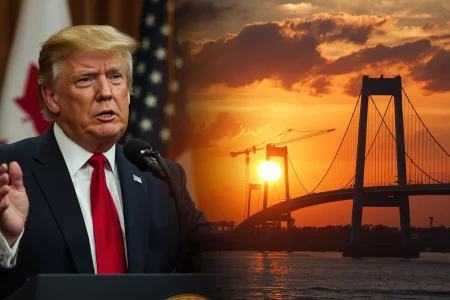
Trump targeted the Gordie Howe International Bridge connecting Detroit and Windsor over trade practices and China ties.
Donald Trump’s going after the $4.7 billion Gordie Howe International Bridge—the one connecting Detroit and Windsor—because he’s upset about trade and Canada’s relationship with China.
He’s insisting on 50% ownership and wants better trade terms. If he gets his way, the bridge’s planned 2026 opening is at risk. Michigan leaders aren’t thrilled. They say Trump’s demands could mess up the economy, hit supply chains, and strain ties with Canada.
A Bridge Over Troubled Trade Waters
North American trade tensions have recently centered on the Gordie Howe International Bridge, a massive $4.7 billion infrastructure project that is almost entirely funded by Canada.
President Donald Trump has hinted that if the United States does not receive “fair treatment,” compensation, and a 50% ownership stake, he may prevent or postpone the bridge’s 2026 opening.
This action targets Canada’s economic ties with China and its trade policies, resulting in a high-stakes standoff that jeopardizes North America’s most important commercial corridor.
It was meant to be a diplomatic and engineering victory. Named for the renowned Canadian “Mr. Hockey” who rose to fame in Detroit, the Gordie Howe International Bridge was intended to be the pinnacle of bilateral cooperation. Instead, the bridge has landed right in the middle of the “America First” trade debate.
Crews started building it back in 2018. For years now, thousands of workers on both the U.S. and Canadian sides of the Detroit River have pushed toward a 2026 opening. They’re finally getting close.
But just as the last details come together, a new political storm is brewing. Trump’s latest comments make it clear: even when the bridge is finished, the fight over who controls it is far from over.
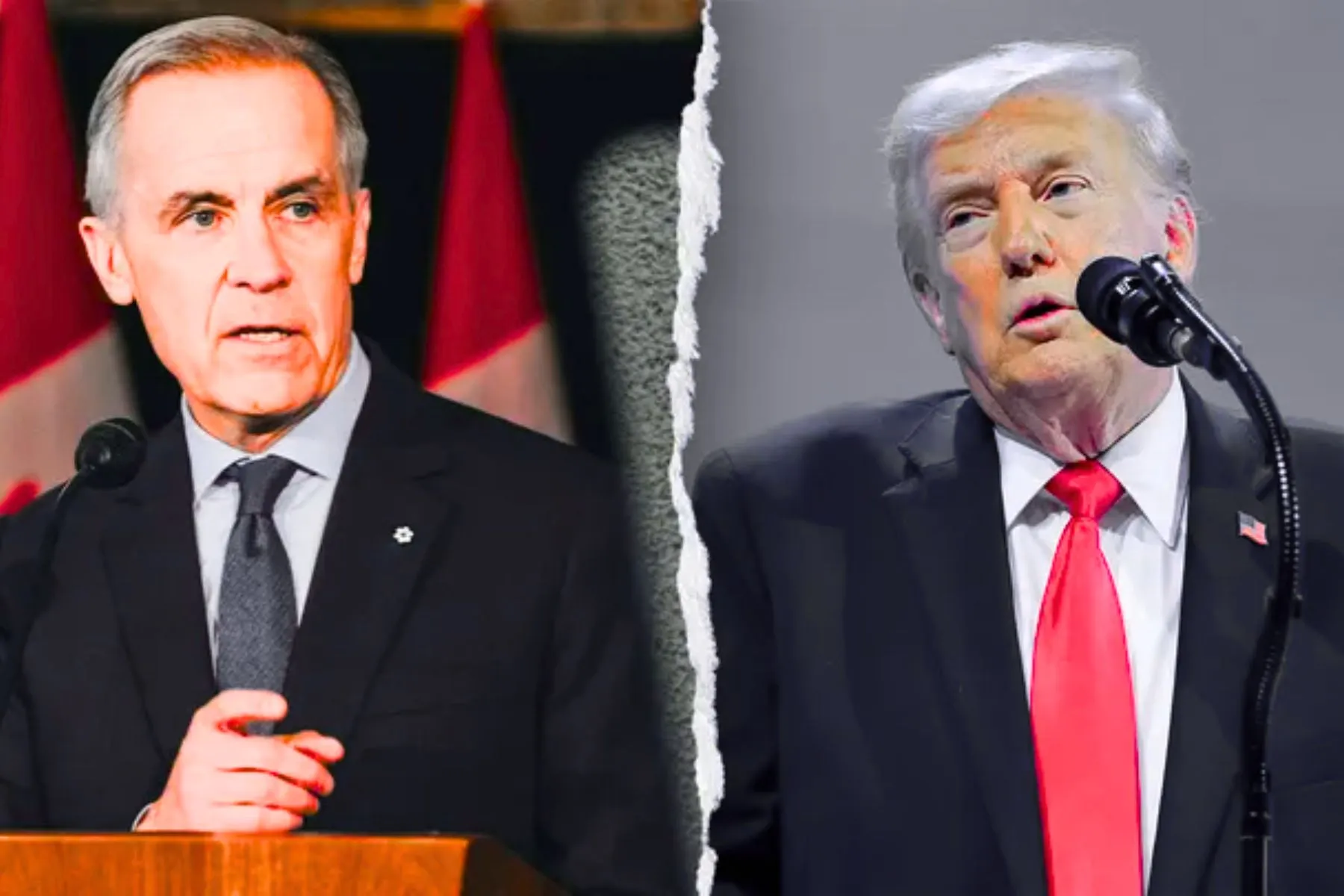
Who Actually Paid the $4.7 Billion?
To really get why tensions are flaring, just follow the money. Building something like this doesn’t happen every day—especially not with one country footing most of the bill. But that’s what happened.
Canada agreed to pay almost the entire $4.7 billion for the bridge and the enormous Ports of Entry on both sides.
Canada didn’t do this out of generosity. The Ambassador Bridge—the old, privately owned span—carries about a quarter of all U.S.–Canada trade. If anything happens to that bridge, the auto industry across North America grinds to a halt. For Canada, building the Gordie Howe Bridge was a matter of economic survival. They saw it as a safety net.
Trump’s Push: Who Owns What, and What’s “Fair”?
The real fight started after a social media post from Trump shook up the Great Lakes region. He says the U.S. gets the short end of the stick under current trade deals.
His point is simple: if the bridge lands on U.S. soil and helps U.S. trade, the U.S. should get more control—maybe even a bigger share.
The 50% Ownership Gambit
Trump wants the United States to own at least half of the bridge. That’s a big ask, especially since the U.S. government didn’t pay for it in the first place. If you look at it like a business move, he’s basically trying to snag a big share in a ready-made project. Diplomatically, it’s thrown Canadian officials for a loop—they just don’t get why he’d expect this.
The China Connection
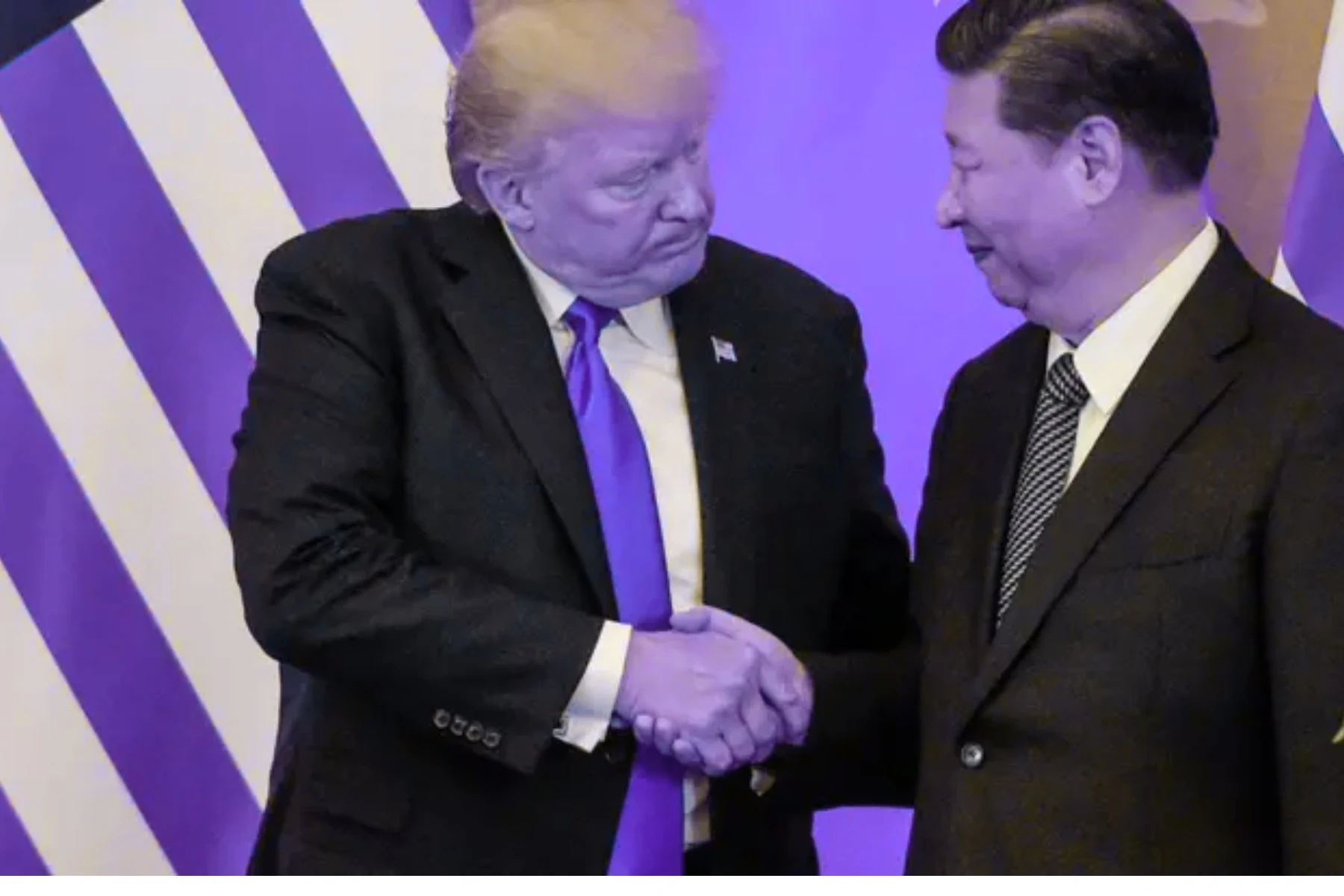
Trump isn’t stopping there. He’s also linking the bridge’s future to how Canada deals with China. Here’s what he’s pointing out:
Trade Negotiations: He accuses Canada of working with Beijing in ways that hurt U.S. interests.
Tariffs: There’s still tension over whether Canada treats American products fairly compared to Chinese imports.
Economic Influence: He’s worried Canada might become a sneaky route for Chinese goods to slip into the U.S. under the USMCA rules.
Michigan Isn’t Fighting Over the Gordie Howe Bridge—for Once
Normally, Michigan politics is all elbows and sharp words, but the Gordie Howe Bridge has pulled off something rare: it’s got everyone on the same team. Both Democrats and Republicans are lining up to defend the project, and nobody’s backing down.
Whitmer Won’t Budge
Governor Gretchen Whitmer isn’t shy about her priorities. She calls the bridge an “economic engine” and sees it as essential for Michigan’s future. For her, it’s not just pavement and steel—it’s the backbone for Ford, GM, and Stellantis. The auto industry lives and dies on that connection.
Republicans Aren’t Buying the Delay Either
Even local Republicans, who usually find ways to pick apart Democratic projects, aren’t thrilled at the thought of slowing things down. Their voters work in factories, drive trucks, and ship goods across the border. They know a nearly finished bridge is no place to make a political statement. Stalling it now? That just hurts Michigan’s own economy.
Why Should You Care? Because It Hits Your Wallet
Maybe you’re in Dallas or Toronto and don’t care about Detroit traffic. But this bridge matters to you, too.
Factories run on just-in-time deliveries now—no giant warehouses packed with parts. If trucks get stuck at the border, assembly lines grind to a halt.
Shipping costs go up when there’s congestion or new fees. Companies don’t eat those costs—they pass them right to you.
And if you like apples from Michigan or corn from the Midwest, you’re part of this story. Canada is the biggest buyer of U.S. farm goods. That food crosses this bridge.
A Detroit trade analyst once put it simply: “A bridge is a handshake in steel. If you refuse to let go, nobody moves forward.” That’s the truth—whether you’re a politician, a factory worker, or just someone who likes a good deal at the grocery store.
The Legal and Diplomatic Reality
Can a U.S. President really stop a bridge that Canada paid for? Legally, it’s a mess. The bridge sits in a web of international laws—the International Bridges Act, plus a stack of cross-border agreements signed over the years.
Now, the President does have a lot of say over border crossings and national security. But if the U.S. tried to grab half of a bridge that Canada built, that would spark a huge legal fight, probably in an international court. It’d also cross the line of what the USMCA stands for, even if it doesn’t break the rules word-for-word.
Sources of Tension
It’s not just about the bridge. Trade data from the U.S. Department of Commerce and Global Affairs Canada shows the relationship’s been bumpy:
Dairy Quotas: The U.S. keeps pushing for more access to Canada’s dairy market.
Softwood Lumber: This fight’s been going on for decades and just won’t end.
Digital Services Taxes: Canada wants to tax American tech giants like Google and Amazon.
The Risk of the “Empty Span”
Picture this: a $4.7 billion bridge, completely finished, just sitting there. Nobody using it. That’s the worst-case scenario for 2026. If the bridge becomes a “stranded asset” because of politics, it won’t just damage trade—it’ll make North American infrastructure planning look like a joke.
Canada’s already spent the money. Steel’s hanging in the air. Walking away now, or using the bridge as a bargaining chip, would change U.S.-Canada relations from “Best Friends” to “Hostile Neighbors” in a heartbeat.
Is There a Middle Ground?
Common sense says they’ll figure out a compromise. Trump’s style usually starts with a big demand, hoping to squeeze out a win somewhere else.
So, a few ways this could shake out:
- Canada gives a little on dairy or digital taxes, and the bridge opens on schedule.
- The U.S. agrees to pay some operating costs in return for a say in running the bridge.
- Or maybe the bridge opens, but the U.S. slaps on “security fees” to claim some compensation.
The Global Context: USMCA and Beyond
The bridge’s 2026 deadline lines up perfectly with the USMCA review. That’s not random. Trade experts think the bridge is a bargaining chip in the bigger fight over North American trade rules.
If the U.S. can use the bridge to get better deals on car parts or labor, they’ll probably see delaying it as worth the trouble. But for Canada, the bridge is a matter of national pride—a real investment, not just another piece on the board.
Fact-Checking the Rhetoric
Let’s stick to the facts, straight from the Windsor-Detroit Bridge Authority (WDBA):
- Canada is paying for the U.S. side of the bridge through a public-private partnership.
- The U.S. will pay Canada back with toll money, but that’ll take decades.
- The bridge should see 2.5 million trucks cross every year.
What about the “China” angle Trump keeps mentioning? He’s mostly talking about Canada’s recent push into EV battery plants, which sometimes involve international partners. Canada has cracked down on foreign investment lately, but U.S. trade hawks still see “China-friendly” policies as a problem.
Moving Toward 2026
With the ribbon-cutting on the horizon, Windsor and Detroit both feel the tension. Groups like the U.S. Chamber of Commerce are begging both governments to put the economy first and leave the drama behind.
The Gordie Howe International Bridge isn’t just a crossing—it’s the backbone of North American trade. Whether it becomes a symbol of partnership or ends up as a monument to a trade war depends on what happens in the next few months.
Last Words
At its core, the fight over the Gordie Howe Bridge isn’t about steel and concrete. It’s about power in a world that’s changing fast. Trump’s push for ownership and compensation points to a bigger move toward protectionism, and that puts the U.S.-Canada “special relationship” on shaky ground.
If cooler heads prevail, the bridge opens in 2026, trucks pour through, and business booms. If not, we might just end up with the world’s costliest dead end.