Federal Judge Blocks Part of California’s Anti-ICE Law
A federal judge in Los Angeles on Monday blocked a California state law that would have prohibited federal immigration agents from wearing masks during operations, while allowing another part of the state’s law requiring visible identification to remain in effect.
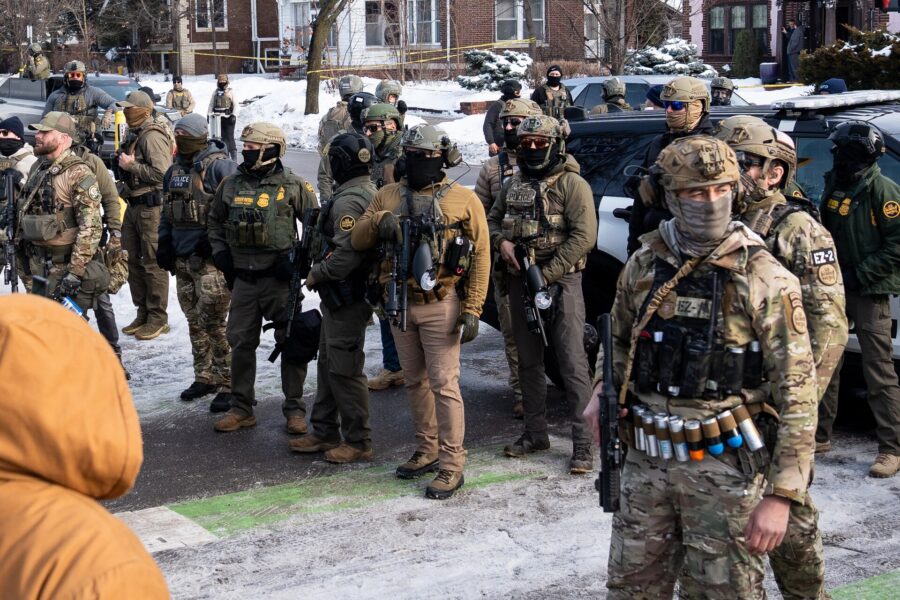
The law at issue — known as the “No Secret Police Act” — was signed by Governor Gavin Newsom in September 2025 and would have banned most law enforcement officers, including those from U.S. Immigration and Customs Enforcement (ICE), from wearing facial coverings such as ski masks, neck gaiters or balaclavas in the course of their duties. The provision was set to take effect Jan. 1 before being halted by the court.
U.S. District Judge Christina Snyder granted a preliminary injunction after the U.S. Department of Justice sued California in November, arguing the state law violated the U.S. Constitution by discriminating against federal officers and undermining federal authority. The judge ruled that the mask ban as written was unlawful because it applied only to federal and local officers while exempting state law enforcement, a distinction that amounted to discriminatory treatment under the Constitution’s Supremacy Clause.
At the same time, the judge upheld a separate state law — the “No Vigilantes Act” — that requires law enforcement officers operating in California to display clear identification showing their agency and badge number. That provision will go into effect on Feb. 19 and applies more broadly to local, state and federal officers alike.
State Senator Scott Wiener, a Democrat who authored the original mask ban, indicated he plans to revise the legislation so it applies to all law enforcement officers in California, including state police, in an effort to address the legal issues identified by the judge. Gov. Newsom highlighted the upheld identification requirement as a partial success for transparency measures in the state.
The dispute reflects ongoing tensions between California’s legislative efforts on law enforcement accountability and broader federal immigration enforcement policies.